Ans: To visit Jammu and Kashmir, every traveller needs 5-10 days to cover all the major spots like Srinagar, Gulmarg, Pahalgam, and Sonmarg for a fulfilling experience.
Best Jammu Kashmir Temples to Explore on Your Next Trip
Jammu and Kashmir, often called heaven on earth, is widely known for its breathtaking landscapes and scenic views. However, many travelers may not be aware of the region’s hidden spiritual gems that narrate centuries-old tales of miracles and the presence of gods.
These temples are not limited to worship and prayers alone; they carry a significant historical and cultural heritage of India, preserved and remembered from generation to generation.
So, if you are planning a trip to Jammu and Kashmir, spare a day or two to take a tour of its famous temples through our Katra tour packages specifically designed for these cultural and religious experiences.
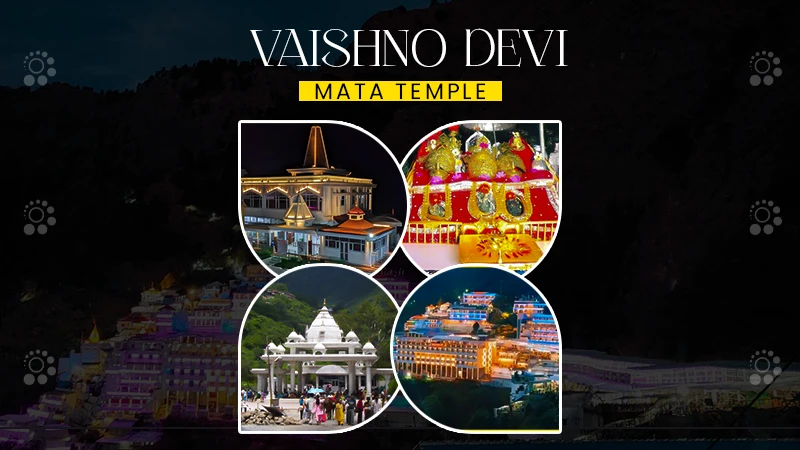
Vaishno Devi Temple, Katra
Vaishno Devi Temple is a spiritual shrine for Indians, located in the lap of the Trikuta Mountains. The 13 km trek starts from the base camp of Katra and takes around 6-7 hours to reach the bhawan. The Goddess Vaishno Devi resides as three natural rock formations known as pindies, the names are: Maha Kali, Maha Lakshmi, and Maha Saraswati.
Whether trekking on foot, taking a helicopter, or using the Bhairon Ghati ropeway, this pilgrimage offers a blend of deep devotion and sacredness throughout the year. Explore Mata Vaishno Devi Yatra Package for a religious journey.
| Best Time to Visit | March to May and September to October |
| Temple Timings | Open 24/7 for darshan (may vary) |
Amarnath Cave Temple, Pahalgam
Next in the list is the Amarnath Cave Temple through the Amarnath Yatra package. It is one of the holiest shrines in Hinduism. Located between the Pahalgam route, the Amarnath cave temple is famous for the Swayambhu Ice Lingam (self manifested shiva lingam).
Legend says this is where Shiva revealed the secret of immortality to Goddess Parvati. During your trek, you will be witnessing the breathtaking stops like Chandanwari, Sheshnag, and Panchtarni.
| Best Time to Visit | June and August |
| Temple Timings | 6:00 AM to 6:00 PM |
Raghunath Temple, Jammu
Acquiring the tag of one of the largest and most magnificent temples in North India, the Raghunath temple is located in the heart of Jammu. Built primarily by Maharaja Gulab Singh, the temple is dedicated to Lord Rama.
The temple is renowned for its stunning architecture, featuring seven soaring towers. The walls are adorned with intricate carvings and 300,000 Shaligram stones brought from the Gandaki River.
| Best Time to Visit | March to April and September to November |
| Temple Timings | 6:00 AM – 8:00 PM |
Sharika Devi Temple, Srinagar
Do you know that Sharikadevi is the deity of Kashmir, and Srinagar is named after her?
Yes, you heard it right. Sharika Devi Temple is one of the sacred places for Kashmiri Pandits in Hari Parbat Hill in Srinagar, dedicated to Goddess Shakti as Jagadamba Sharika Bhagwati.
The premises feature a naturally carved Sri Chakra on a rock. Hence, you can reach the temple by climbing the staircase or ropeway and offering your prayers.
| Best Time to Visit | May to November |
| Temple Timings | 6:00 AM to 10:00 PM |
Ranbireshwar Temple, Shalamar Road
Featuring a 8 feet Shiva lingam in its sanctum, the Ranbireshwar is one of the largest Shiva temples in North India. Apart from the main lingam, there are around 1.25 lakh dwarf Shiva lingams present in the temple premises.
The temple was founded and built by one of the prominent leaders of the great Dogra dynasty, Maharaja Ranbir Singh. On occasions like Shivratri, the devotees offer milk, flowers, and fruits to the Shiva Lingam, praying for their prosperity and seeking lifelong blessings.
| Best Time to Visit | September to March |
| Temple Timings | 5 AM to 9 PM |
Martand Sun Temple, Mattan
Martand is the Sanskrit name for Surya. Built in the 8th century AD, the Martand Sun Temple is a Hindu pilgrimage site located in the city of Anantnag.
It is one of the few ancient structures of the Sun temple that still exists in the Indian heritage.
The premises feature three chambers, which are the mandapa, the garbhagriha, and the antralaya. Other than that, the holy ground includes 84 smaller shrines and a main temple with intricate carvings of other Hindu deities.
| Best Time to Visit | April to June |
| Temple Timings | 6:00 AM to 7:00 PM |
Shankaracharya Temple, Srinagar
The next spiritual gem in the list of temples in Jammu and Kashmir is the Shankracharya Temple, which is located in Srinagar. The temple features Lord Shiva as the main deity within a shivalinga.
Another name for the temple is the Jyesteshwara temple. You will notice the heavy crowds during the Amarnath Yatra.
Other than that, you can experience the spiritual power at festivals like Shivratri and Shravan Poornima, where devotees offer milk, fruits, and flowers to Lord Shiva to seek blessings.
| Best Time to Visit | May to September |
| Temple Timings | 7:00 AM to 8:00 PM |
Conclusion
Not only is the journey to Vaishno Devi a spiritual pilgrimage, but it’s an intense journey of faith, and during this time, you will be overwhelmed with the majesty of the Trikuta Hills. With some planning and research of the history of Vaishno Devi Temple, its darshan timing, the best time to visit, and what to expect when trekking through the mountains to get there, you can successfully navigate your journey so you can enjoy the yatra in a peaceful manner and have an amazing experience! By using Katra with Patnitop 3 Nights 4 Days Tour Package, you will have a seamless and stress-free journey that incorporates both spirituality and nature! Many pilgrims will also plan time to visit the surrounding beautiful areas, such as Patnitop.
FAQs
Q1. How many days are enough for Jammu, Kashmir?
Q2. Which is the oldest temple in Jammu and Kashmir?
Ans: Shankaracharya Temple is the oldest temple in Jammu and Kashmir.
Q3. Where is the Vaishno Devi temple located?
Ans: The Vaishno Devi shrine is located in the Trikuta Mountains, near Katra in the Resai district of Jammu and Kashmir.
Related Post